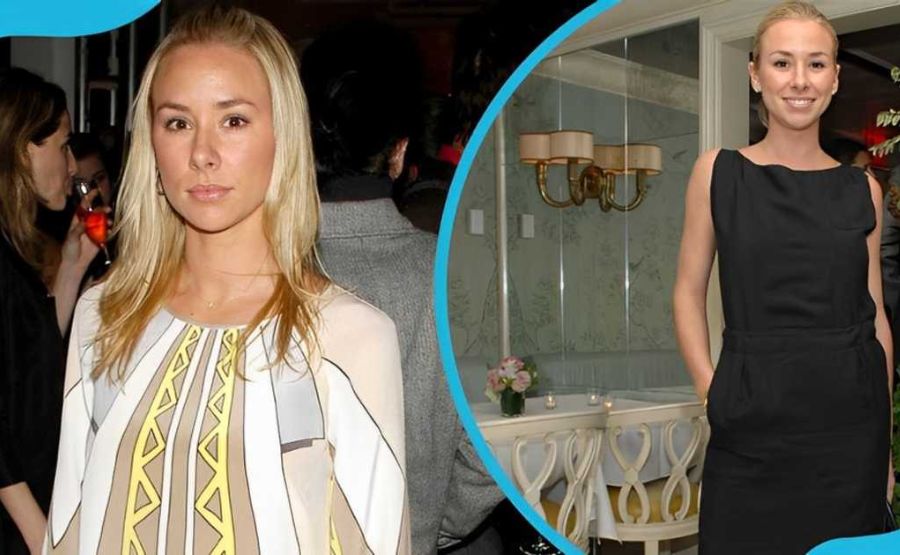
Emily Threlkeld: Ambition Without Audience
In an era when public presence is treated as currency, Emily Threlkeld has built a quietly consequential life by investing in the opposite — proving that genuine accomplishment rarely requires a spotlight.
Quick Facts
| Detail | Information |
| Full Name | Emily Frances Threlkeld (also known as Emily Threlkeld Ford) |
| Date of Birth | January 2, 1981 |
| Place of Birth | Naples, Florida, USA |
| Nationality | American |
| Occupations | Fashion publicist, marketing consultant, entrepreneur, co-founder |
| Education | B.A. Business & Marketing, University of Miami (2003) |
| Spouse | Harold Ford Jr. (married April 26, 2008) |
| Children | Georgia Walker Ford (born December 2013); Harold Eugene Ford III (born May 2015) |
| Notable Business | Co-founder, Basta Surf luxury swimwear (2009–c.2016) |
| Key Employers | Nina Ricci; Carolina Herrera / Puig Group |
| Notable Recognition | Named among “New York’s Most Stylish Women,” New York Times (2008); Vogue “Best Dressed Guests” (2010) |
| Key Relationships | Mother: Deborah Beard; Stepfather: Anson Beard Jr. (former Morgan Stanley chairman); Husband: Harold Ford Jr. (former U.S. Congressman, D-TN) |
| Estimated Net Worth | Approx. $3 million (unverified) |
| Residence | New York City (Manhattan) |
Roots in a Gulf Coast City
Naples, Florida, does not produce many fashion publicists. The small Gulf Coast city — its streets lined with banyan trees and its downtown oriented toward yacht traffic and retiree wealth — is better known for real estate than ambition. Emily Frances Threlkeld was born there on January 2, 1981, the first day of a new year and, as it would turn out, a fitting symbol of perpetual new beginnings.
Her childhood was shaped early by disruption. When Emily was two years old, her parents, Deborah Beard and Tom Threlkeld, got divorced. She absorbed that early instability and, by all accounts, converted it into adaptability. Her mother later married more than once; one stepfather, Anson Beard Jr., was a substantial figure — a Wall Street investor who served as chairman of Morgan Stanley and who brought the Beard family’s networks and cultural weight into Emily’s life.
Growing up in a blended household with financial and business currents running through it gave Emily a specific kind of formation. She was not raised in a political dynasty like her future husband, but she was exposed, through stepfamily ties, to the codes of New York professional life long before she ever lived there. One step-relative, Peter Beard, was a celebrated fashion and nature photographer — a figure whose career straddled art, celebrity, and commercial image-making. That proximity to creative and ambitious lives had its effects.
At the Community School of Naples, Emily was by all accounts social, energetic, and academically solid. She was a cheerleader and a student council member — not rarities in a Florida prep school, but signals of someone comfortable in front of others and interested in organizing collective effort. She graduated in 1999.
See also ”Rex Ryan: The Loudest Man in the Room and What He Revealed About American Football”
The Education That Shaped a Career
Emily enrolled at the University of Miami and pursued a degree in Business and Marketing — a combination that, in hindsight, reads as deliberate. It married the creative instincts she had developed as a young woman in a fashion-adjacent household with the analytical tools she would need to actually build things. She graduated in 2003.
Miami, as a city, offered its own education. It sits at the intersection of Latin American glamour, American money, and a perpetual summer that makes image feel like substance. Emily absorbed its textures — the attention to style, the ease with public presentation — before heading north to a city where those instincts would be tested in a far more rigorous marketplace.
Building a Career in New York’s Fashion World
Emily arrived in New York City in 2003 with a marketing degree and no family name that opened doors in the fashion industry. What she had was talent, precision, and an understanding of how brands translate culture into commerce.
Her first significant role was as a publicist for Nina Ricci, the historic French fashion house then navigating a complex creative revival. In that position, she handled media placement, event logistics, and the delicate orchestration of celebrity styling. Her clients on loan to the brand included Renée Zellweger and Jada Pinkett Smith — names whose appearances in Nina Ricci pieces carried real promotional weight. It was meticulous, relationship-intensive work, and Emily did it well.
She subsequently moved within the luxury fashion architecture of the Puig Group, the Spanish conglomerate that owned both Nina Ricci and Carolina Herrera. There she worked directly alongside Mario Grauso, the group president overseeing both labels. The role expanded her from brand-specific publicity into the broader mechanics of running and positioning multiple luxury labels simultaneously. It was an early exposure to the kind of strategic thinking — not just tactical execution — that would later define her entrepreneurial work.
By the time Emily had spent several years in New York fashion, she had become what the industry calls a trusted insider. She understood the architecture of desire — how a brand shapes aspiration, how placement creates perception, how the right celebrity in the right garment at the right moment can move markets. She had not invented that knowledge, but she had mastered it.
Basta Surf: Building Something From Scratch
In 2008, a designer named Samantha August made a choice that would eventually reshape Emily’s career. August quit her position at Condé Nast — the publishing colossus that controls Vogue, Vanity Fair, and a half-dozen other arbiters of taste — bought a round-the-world plane ticket, and spent a year traveling and surfing. She returned to New York with a product concept and called Emily.
The two women co-founded Basta Surf in 2009. The name was arresting and a little cheeky — “basta” meaning “enough” in Italian and Spanish, a word that suggested a kind of impatience with the mediocre. Their proposition was specific: luxury swimwear manufactured entirely in Los Angeles from Italian fabrics, built to fit actual women’s bodies rather than the abstracted mannequin proportions that had long governed the category. Every piece was reversible. A portion of each sale went to Global Water, the environmental charity. The sustainability commitment was not an afterthought or a marketing angle — it was woven into the founding documents.
The brand’s rise was rapid and genuine. Jessica Alba was photographed in Basta Surf. Heidi Klum wore it. The designers Nina Agdal and Chrissy Teigen, both early figures in a new generation of swimwear-forward models, appeared in the label’s pieces. Then came the validation that the fashion industry takes most seriously: placement in Sports Illustrated. In the 2014 Swimsuit 50th Anniversary issue — the most coveted edition in the magazine’s history — three cover models appeared in Basta Surf designs. The brand was available at Saks Fifth Avenue, Moda Operandi, Intermix, Barneys New York, and Ron Herman. These were not starter retailers.
In 2015, Raj Manufacturing — Orange County, California’s largest swimwear manufacturer, with reported annual revenues of roughly $130 million — acquired Basta Surf. The company’s president described the brand in terms that spoke to real accomplishment: beautiful designs, strong distribution with premier retailers, a genuine cult following. Emily and Samantha stayed on as creative directors after the acquisition. By late 2016, the brand’s social media presence had gone quiet, and the subsequent history is not publicly documented.
What the Basta Surf chapter demonstrates, however, is unambiguous. Emily did not leverage her husband’s name to build the brand. She did not trade on political connections or celebrity adjacency. She applied the specific skills she had spent a decade developing — brand positioning, luxury market access, celebrity relationship management, and aesthetic judgment — to a product she believed in, and it worked. The acquisition by one of the country’s largest swimwear manufacturers is the industry’s clearest signal of success: a company with $130 million in revenue buys brands that are worth buying.
A Love Story Navigated in Public
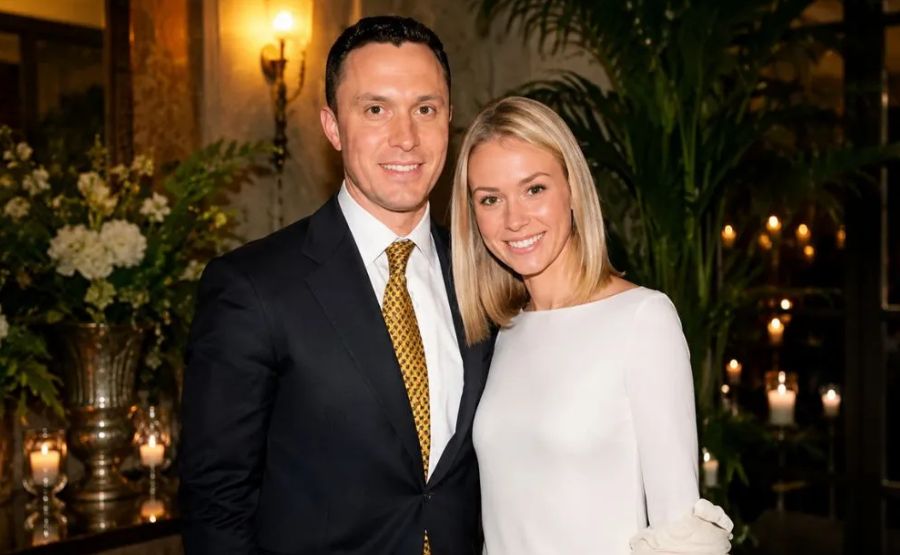
Emily met Harold Ford Jr. in 2003 or 2004 — accounts vary slightly — at a wedding in New Orleans. Her mother, Deborah Beard, made the introduction. It was a matchmaking gesture that, in retrospect, had an almost novelistic quality: a Florida woman with a Wall Street stepfather introducing her daughter to one of the most closely watched young Democrats in the country.
Harold Ford Jr. was, at that moment, a sitting member of the U.S. House of Representatives from Tennessee’s 9th Congressional District — a seat his father had held before him. He was nationally recognized, frequently named among Washington’s rising figures, and widely considered a likely Senate candidate. He had been named one of People magazine’s 50 Most Beautiful People. He was also, by most accounts, looking for something real.
Their relationship developed quietly over several years. Then came 2006, when Harold launched what would be one of the most closely watched Senate races of that political cycle. He ran for the Tennessee seat vacated by the retiring Republican Bill Frist, competing in a statewide election in which the demographics and political temperature made his path narrow. The race was nationally watched, in part because Harold was making a credible bid to become the first Black U.S. Senator from Tennessee since Reconstruction. He also was involved with Emily, and their interracial relationship was not incidental to the media scrutiny that followed.
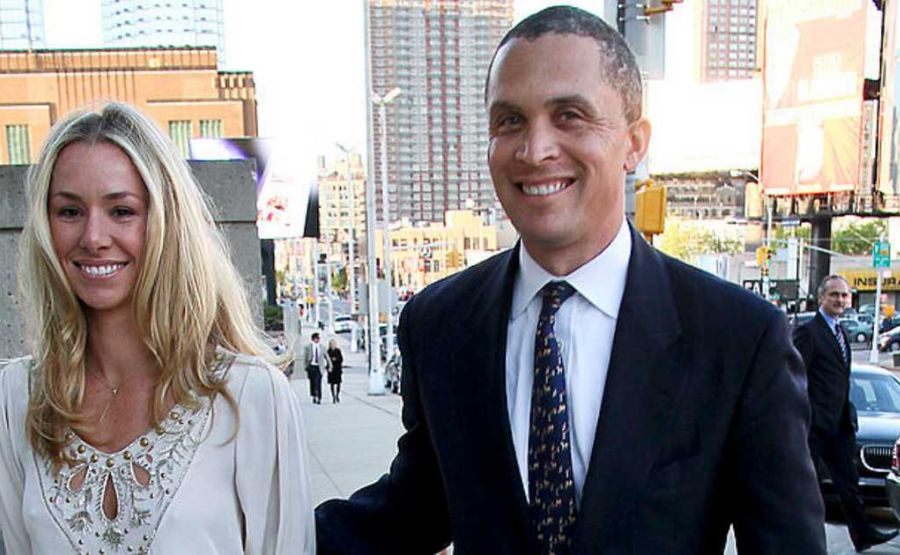
The political advertising against Harold in that campaign descended, at moments, into racist imagery and implication. Emily was present for the intensity of that period — the surveillance of a national campaign, the personal exposure, the weight of watching someone you care about subjected to attacks that were as personal as they were political. She has never spoken publicly about what that period felt like. What is documented is that she did not retreat from Harold. They stayed together, got engaged the following year in Paris — Harold proposed at the Ritz Hotel — and married on April 26, 2008, at Trinity Cathedral Episcopal Church in Miami, Florida, with approximately 300 guests from politics, finance, fashion, and family in attendance.
The wedding was significant without being a spectacle. It was the joining of two well-formed professionals with distinct careers and a shared sense of how to navigate public life without being consumed by it.
Personal Life: Privacy as Discipline
Harold Ford Jr. lost the 2006 Tennessee Senate race to Republican Bob Corker by roughly three percentage points — one of the closest Senate races of that year. He left Congress in January 2007, took a vice chairmanship at Merrill Lynch, became chairman of the Democratic Leadership Council, and began appearing regularly as a television political analyst. He later joined Morgan Stanley as a managing director, worked for Fox News, and in 2022 became a co-host of The Five, the network’s flagship afternoon political program.
Emily moved through all of these transitions alongside him. She has characterized her role in her husband’s professional life with characteristic understatement: Harold has reportedly called her his “Director of Research” — an informal but telling description. It suggests that she reads seriously, thinks carefully, and offers counsel. That she does this without a formal title or a public platform is, by now, an established pattern.
The couple’s daughter, Georgia Walker Ford, was born in December 2013. Their son, Harold Eugene Ford III, was born in May 2015, continuing a name that has passed across three generations of political ambition. The family lives in a penthouse apartment on Manhattan’s Upper East Side. Emily and Harold have maintained, with evident effort, their children’s near-total absence from public life — no social media appearances, no press photographs, no profiles. For two people whose life overlaps continuously with television news, financial services, and Washington politics, that level of protection requires constant, active work.
Emily maintains no public social media presence. She gives no regular interviews. She appears at select charity events and has been associated with fundraising for the American Cancer Society, the Metropolitan Museum of Art, and the New York Public Library — institutions that represent, in their different ways, the New York civic culture she has made her home. She has been recognized twice in mainstream fashion media: the New York Times named her among “New York’s Most Stylish Women” in 2008, and Vogue placed her among its “Best Dressed Guests” in 2010 for her appearance at the Costume Institute Gala. Both recognitions came in the early years of her marriage, when the intersection of her fashion career and her husband’s political prominence made her briefly visible.
Since then, she has chosen consistency over celebrity.
Legacy and Continued Relevance
Emily Threlkeld does not have a Wikipedia page of her own. She has not written a memoir or given a TED talk or cultivated a curated Instagram presence. Her relevance in the cultural conversation arrives almost entirely through her absence from it.
That absence is itself a kind of argument. In the contemporary media landscape — where the spouses of public figures routinely build parallel brands, where political partners give separate interviews and maintain distinct social media identities — Emily’s approach represents a deliberate counter-model. She built a genuine career in one of New York’s most competitive industries before anyone outside the fashion world knew her name. She launched a brand that reached Sports Illustrated covers and Barneys shelves and attracted a $130-million company’s acquisition offer, all without a personal PR campaign anchored to her husband’s identity.
The Basta Surf chapter, in particular, matters in ways that go beyond swimwear. It demonstrates that the skills Emily developed as a fashion publicist were not merely executional. She understood markets. She understood product. She understood how to build a brand from nothing in an industry that has no tolerance for pretenders. The acquisition by Raj Manufacturing in 2015 is the market’s own verdict: the brand was real, and it was valuable.
Her broader influence is quieter and harder to quantify. In the circles where Harold Ford Jr. operates — finance, media, Democratic politics — Emily is a presence whose intelligence and judgment are privately acknowledged. Harold’s description of her as his “Director of Research” is not a joke. It is a window into a partnership in which Emily’s contributions are substantial and largely invisible, which is precisely how she prefers them.
The model she represents — serious professional career before public life, entrepreneurial venture that succeeded on genuine merit, deliberate maintenance of privacy in a family adjacent to constant media attention — has become more, not less, relevant as the distinctions between public and private have continued to collapse. She is a study in what it looks like to hold your ground.
Final Words
It would be easy, and wrong, to frame Emily Threlkeld’s story primarily as one of supporting another person’s ambitions. That framing misses the substance. She built a career in New York fashion on her own terms, long before her marriage made her an object of public curiosity. She co-founded a brand that succeeded commercially and critically by any measurable standard. She made the choice, repeatedly and apparently consciously, to keep her professional and personal life separate from the celebrity machinery that surrounds political and media families.
The question her life raises — one that she has never publicly addressed, which is consistent — is whether that model of influence without visibility is sustainable in the long run, or whether it requires the kind of privilege that comes from having a spouse with a large enough platform to make your own platform unnecessary. It is a legitimate question without a clean answer.
What is clear is that Emily Threlkeld has made genuine choices. She has a degree she used, a career she built, a business she co-created, a family she has protected, and a marriage that has lasted nearly two decades through considerable public pressure. None of these things happened to her. She made them happen.
The quieter the ambition, sometimes, the harder the work.
FAQs
1. When and where was Emily Threlkeld born?
January 2, 1981, saw the birth of Emily Frances Threlkeld in Naples, Florida. She is 45 years old as of 2026.
2. What is Emily Threlkeld’s educational background?
She attended the Community School of Naples for high school and graduated from the University of Miami in 2003 with a bachelor’s degree in Business and Marketing.
3. How did Emily’s career in fashion begin?
After graduating from the University of Miami, Emily moved to New York City and began working as a publicist for Nina Ricci, the French luxury fashion house. She handled media placement, event coordination, and celebrity styling for the brand.
4. What other fashion brands did Emily work with?
She worked within the Puig Group’s umbrella, which included both Nina Ricci and Carolina Herrera. She worked directly alongside Mario Grauso, the group president overseeing both labels, functioning as publicist and consultant.
5. What is Basta Surf, and what was Emily’s role?
Basta Surf was a luxury swimwear brand Emily co-founded in 2009 with designer Samantha August. Emily served as co-founder and co-creative director, shaping the brand’s positioning, aesthetic, and retail partnerships. The brand was manufactured in Los Angeles from Italian fabrics and incorporated an environmental mission through a partnership with Global Water.
6. How commercially successful was Basta Surf?
Significantly. The brand attracted celebrity clients including Jessica Alba, Heidi Klum, Chrissy Teigen, and Nina Agdal. It was stocked at major luxury retailers including Barneys New York, Saks Fifth Avenue, Intermix, Ron Herman, and Moda Operandi. In 2015, Raj Manufacturing — Orange County’s largest swimwear company with an estimated $130 million in annual revenue — acquired the brand.
7. How did Emily Threlkeld meet Harold Ford Jr.?
They met at a wedding in New Orleans in 2003 or 2004. Emily’s mother, Deborah Beard, made the introduction. Harold was then a sitting U.S. Congressman representing Tennessee’s 9th District.
8. When and where did Emily and Harold marry?
They married on April 26, 2008, at Trinity Cathedral Episcopal Church in Miami, Florida. Approximately 300 guests attended. Harold proposed at the Ritz Hotel in Paris in 2007.
9. How many children do Emily and Harold have?
Two. Their daughter, Georgia Walker Ford, was born in December 2013. May 2015 saw the birth of their son, Harold Eugene Ford III.
10. How did the 2006 Senate race affect Emily personally?
Harold’s 2006 Senate campaign in Tennessee attracted intense national scrutiny, including racially charged political advertising directed against Harold. Emily, who was then his partner, was caught in the media spotlight during one of the more publicly hostile political seasons of the decade. She remained with Harold through the experience, and they became engaged the following year.
11. Does Emily Threlkeld maintain a social media presence?
No. She has no confirmed public accounts on Instagram, Twitter/X, Facebook, or any other platform. This deliberate absence from social media is one of the reasons she remains frequently searched online.
12. What charitable causes is Emily associated with?
She has been publicly connected to fundraising for the American Cancer Society, the Metropolitan Museum of Art, and the New York Public Library. She attends select events but does not court charitable visibility.
13. Has Emily received any public recognition in the fashion industry?
Yes. The New York Times named her among “New York’s Most Stylish Women” in 2008. Vogue included her among its “Best Dressed Guests” in 2010 following her appearance at the Costume Institute Gala at the Metropolitan Museum of Art.
14. What is Harold Ford Jr.’s current career, and what role does Emily play in it?
Harold works as a financial executive at PNC Financial Services, where he serves as Vice Chairman of Corporate & Institutional Banking, and has been a political commentator on Fox News, including as a co-host of The Five since 2022. Harold has informally referred to Emily as his “Director of Research,” suggesting an advisory role in his professional thinking that she fulfills privately.
15. Where does the family currently live?
Emily, Harold, and their two children live in a penthouse apartment on Manhattan’s Upper East Side. The family has also maintained a Nashville, Tennessee, property. Both children are kept substantially out of public view.
Learn, explore, and grow with every article you read at Context House.